

Every online casino experience commences not with a game, but with the software platform that supplies it. The platform determines how quickly pages load, whether the slots feel responsive, and how easily you can move between the cashier, live dealer tables, and your account history. For a brand like Bwin Casino, the choice of software infrastructure is a core decision that shapes everything from the variety of games available to the security protocols protecting your transactions. We have reviewed this landscape thoroughly, and what emerges is a complex picture. No single platform approach is universally superior, and understanding the trade-offs helps you make more informed decisions about where to play and what to expect once you log in.
The Structure Underpinning the User Interface

When we talk about a casino software platform, we are describing a complex ecosystem of interconnected systems. In its center sits the gaming server, that hosts the random number generator and game logic for thousands of titles. The server communicates with a player account management system that monitors balances, loyalty points, and session history in real time. Built on top is the front-end client—the website or app you engage with—which must render graphics, handle user input, and maintain a stable connection without using excessive device resources. Bwin Casino operates on a platform that combines components from multiple specialist providers instead of relying on a single monolithic system. This modular design means the sportsbook engine, the live casino streaming infrastructure, and the slot aggregation layer can each operate on best-in-class technology while using a unified login and wallet.
Behind the scenes, a content delivery network caches static assets like game thumbnails and promotional banners across servers worldwide, reducing latency regardless of your geographic location. Meanwhile, a message queue system handles the continuous stream of bet settlements, bonus triggers, and notification dispatches without congestion. The tangible benefit is that when you place a bet at a blackjack table, the result arrives without perceptible delay, and your balance updates instantly. For the operator, this architecture offers the flexibility to add new game providers without rebuilding the entire platform, guaranteeing that the game library can expand rapidly to meet player demand. The disadvantage is that integrating disparate systems increases the points of potential failure, which is why robust monitoring and redundancy are non-negotiable requirements.
Live Dealer Broadcast System
Live casino games place unique demands on a software platform that go well beyond what slots or virtual table games require. Each live table at Bwin Casino counts on a physical studio—often situated in Latvia, Malta, or the Philippines—where professional dealers operate real roulette wheels, blackjack tables, and baccarat shoes under the eye of multiple high-definition cameras. The video feed must be compressed, compressed, and delivered to players with latency calculated in milliseconds. If the stream lags even marginally behind the betting interface, players can become frustrated when their bets appear to close before the dealer physically halts accepting wagers. The platform syncs the interactive betting overlay with the video stream using precision timestamping, so your bet placement is registered before the dealing sequence begins.
The optical character recognition technology built in live studio tables converts the physical outcome of each game round—which card was pulled, where the roulette ball landed—into digital data that the platform handles instantly. This data triggers win-loss calculations across all active player accounts at that table simultaneously. The platform must then present results, update balances, and reset the betting interface for the next round, all within a window of roughly 15 to 30 seconds between game rounds. Scalability is another obstacle: a popular roulette table might host several hundred concurrent players, each with their own bet slip, chat messages, and balance updates. Bwin Casino tackles this through edge computing nodes that manage player-specific data locally while the core game logic operates centrally, preventing any single table from becoming a bottleneck during peak hours.
Bonus System Mechanics and Staking Logic
The bonus mechanism on a online casino is much more than a simple promotional tool—it is a advanced logic engine that must manage multiple simultaneous offers, game contribution rates, and time-sensitive terms for many active player profiles. When you take a welcome package at Bwin Casino, the platform assigns a specific bonus agreement to your account. This contract outlines the betting requirement multiplier, the selection of qualifying games, the percentage each game class contributes toward the condition, and the deadline determined to the exact minute. Some slots contribute 100% of each bet toward wagering, while casino table games like blackjack or roulette may contribute only 10% or 20% because their reduced house advantage gives the player a statistical advantage in fulfilling the bonus.
The platform must also uphold fair rules such as maximum bet limits while a bonus is active and block bonus abuse patterns. If the system identifies that a player is wagering large amounts on high-return-to-player slots to rapidly complete wagering requirements, then transitioning to stable games once the bonus is cleared, it can identify these behaviors automatically. At the same time, the bonus engine handles free spin allocations, which often come with their own group of conditions—independent betting rules on winnings, maximum spin values, and restricted titles. For the player, knowing that this engine works predictably and transparently is what turns bonus terms feel like equitable rules rather than hidden traps.
Game Integration and Provider Variety
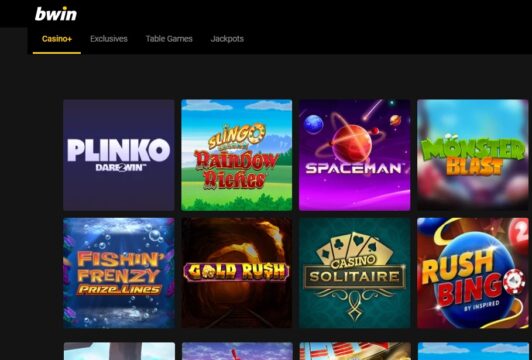
A current casino platform has to work as a content hub, collecting slot titles, table games, and instant-win products from numerous independent studios. Aggregation platforms like Pariplay, Relax Gaming, and SoftSwiss serve as intermediaries, offering casinos a one integration point through which they access a portfolio of thousands of games. For the player, this directly translates into variety—the gap between a lobby with 300 slots and one with 3,000 is nearly always an aggregation layer. Bwin Casino unites major players like NetEnt, Play’n GO, and Pragmatic Play next to niche studios such as Nolimit City and Hacksaw Gaming. This blend means we can offer anything from low-volatility fruit machines to high-volatility narrative-driven slots with five-figure maximum win potentials.
The aggregation model does introduce certain complexities. Each studio runs on its own release calendar, and their games arrive with distinct technical requirements and return-to-player configurations. Some developers design primarily for mobile play with portrait-mode-first designs, while others build landscape-oriented experiences that excel on desktop. From our perspective, managing this aggregated library involves weeding out low-quality titles that do not satisfy performance standards, while ensuring the portfolio covers the full spectrum of player preferences. A common misconception is that aggregated platforms experience slower loading times because assets are loaded from multiple third-party servers. In well-engineered implementations, however, a wrapper technology loads in advance game shells and standardises communication protocols, so the switch from a NetEnt slot to a Microgaming table game appears seamless.
Mobile-Friendly Design and Cross-Device Consistency
Smartphone gambling now represents the greater part of online casino interactions, which has forced platforms to redesign their whole design approach. A platform that merely scales down a desktop website to fit a phone screen offers a below-par experience with minuscule buttons, illegible text, and frequent mis-taps. The contemporary method is flexible progressive web framework that recognises your device’s screen size, operating system, and connection speed, then provides an optimized interface. At Bwin Casino, the platform adjusts the game lobby layout, cashier flow, and even the resolution of streamed live dealer feeds based on if you are using an iPhone over 5G, an Android tablet on Wi-Fi, or a desktop computer with a large monitor. Touch target dimensions expand on smaller screens, and navigation folds into thumb-friendly menus located at the bottom of the viewport.
Cross-device consistency extends beyond visual layout to session persistence. If you initiate a gaming session on your laptop, make a few sports wagers during a lunch break on your phone, and then access a live casino table on your tablet in the evening, the platform must reconcile all of this activity against a single account state without duplication or lag. This requires a centralized player wallet that updates in near real-time across all session instances. The technical challenge is not insignificant—network interruptions on a mobile device must not cause duplicate bet placements or incorrect balance displays. Bwin Casino handles this through idempotent transaction processing, where each action bears a unique identifier that prevents the system from processing it twice, regardless of how many times the request is retried after a connection drop.
Transaction Management and Cashier Integration
The payment module of a casino platform connects to numerous third-party gateways, each featuring its own transaction times, fee structures, and geographic restrictions. At Bwin online slots Casino, the cashier unifies credit and debit card processors, e-wallet services like PayPal, Skrill, and Neteller, prepaid voucher systems, direct bank transfer mechanisms, and progressively, instant payment rails that leverage open banking APIs. The platform categorises each method by deposit speed—usually instant for most digital methods—and withdrawal processing time, which can span from a few hours for verified e-wallet accounts to several business days for bank wire transfers. Behind each listed method, the platform maintains webhooks that monitor for transaction status updates from the payment provider and activate account balance adjustments within seconds.
A well-designed cashier does more than handle payments; it proactively manages risk and compliance. Before a withdrawal is approved, the platform runs a series of automated checks. It confirms that any active bonus wagering requirements have been met, verifies that the withdrawal amount does not exceed any applicable limits, and guarantees that the payment method matches the deposit source when required by anti-money-laundering regulations. If you deposited with a Visa card, the platform may route withdrawal requests back to that card before presenting alternative payout methods. The system also tracks for rapid successive transactions that might signal problematic play or fraudulent activity, adding friction only where a genuine risk is detected while maintaining routine transactions fast and uneventful.
Responsible Gambling Tools Integration
Compliance duties and moral obligations require that responsible gambling measures are integrated immediately into the platform’s architecture, not attached as an secondary consideration. At Bwin Casino, the identical account management system that tracks your loyalty tier and bonus progress also enforces the deposit limits, session time reminders, and cool-off periods you configure. When you set a daily deposit cap, the platform’s payment validation layer checks every incoming deposit attempt against your defined limit and stops the transaction if it would lead to an exceedance—this takes place before the payment gateway is even contacted. Session timers run client-side to display pop-up notifications after configurable intervals, but the underlying enforcement happens server-side, so logging out and back in is not able to circumvent a timeout period.
Self-exclusion functionality requires the platform to sustain a separate exclusion registry that overrides all other account states. When a player activates self-exclusion, the system must instantly terminate any active gaming sessions, cancel pending withdrawals only if legally permissible, and block login attempts across all devices for the duration of the exclusion period. It must also suppress all marketing communications retrieved from the platform’s customer relationship management module, which frequently works as a connected but distinct system. The integration complexity here is substantial because marketing data often updates on a delay, and the exclusion must be enforced instantly. Bwin Casino deals with this through a hard flag on the core account record that all downstream systems must verify before performing any action, from sending a promotional email to authorising a login token.
Security Infrastructure and Licensing Compliance
Encryption and Safeguarding of Data
The platform’s security setup begins with Transport Layer Security which ensures that every piece of data transmitted between your device and the casino servers remains unreadable to any external party attempting to intercept it. At Bwin Casino, this encryption encompasses login credentials, payment card details, and identity verification documents uploaded during the know-your-customer process. What many players do not see is the extra layer of protection at rest—sensitive data stored on servers is encrypted using modern standards, and access is governed by rigorous role-based controls that limit which employees can view what information. The platform also uses tokenisation for payment processing, replacing raw card numbers with safe alternatives that are of no value if a breach were ever to occur.
Licensing Frameworks and Audits
Licensing requirements impose another substantial set of constraints on the platform. Regulators in jurisdictions like Malta, Gibraltar, and the United Kingdom demand that platforms maintain complete, tamper-proof audit trails of every transaction and game round. This means the platform must log millions of events daily and store them in a format that can be recreated for any dispute resolution. Independent testing houses such as eCOGRA and Gaming Laboratories International regularly audit the random number generation algorithms and return-to-player calculations on behalf of licensed operators. For a brand like Bwin Casino, maintaining these certifications requires the platform to run code that can be inspected and verified by external auditors at any time, effectively forcing a level of transparency that makes intentional tampering technically impossible.
Platform Performance and System Dependability
Operational uptime is the silent metric that builds player trust over any bonus or game selection. A platform that crashes during high-traffic evenings or hangs during payment processing swiftly undermines the trust that a casino relies upon. The infrastructure at Bwin Casino is built around redundancy: game servers function in clusters where when a single node goes down, traffic is automatically rerouted to a peer node with zero disruption to live gameplay. Database systems mirror in real-time to standby instances in geographically separate data centres, so a physical disaster at one location does not result in data loss. The platform’s support engineers tracks response times, error rates, and server load through monitoring panels that trigger alerts when any metric deviates from normal range, often allowing engineers to resolve issues before players perceive degradation.
For the player, platform reliability shows up in concrete ways. Game rounds resolve in under a second, deposits reflect in the account balance right away, and withdrawal requests are handled without failure notices or unexplained rejections. When issues arise—and they always will in any sophisticated platform—the effectiveness of the platform’s error handling sets apart a professional service. Rather than displaying confusing technical errors, the platform needs to describe what happened in plain language and offer a straightforward route to resolution, such as holding for a short time and attempting once more or contacting support with a particular case number. Load testing is performed continuously, with simulated traffic spikes that far exceed typical usage patterns to ensure that big sports matches or fresh game launches do not overload the infrastructure, maintaining the experience reliable when player numbers spike.